


Manhattan Office-to-Residential Conversions & the 467-m Tax Abatement: Financial Feasibility Study
Quantitative breakdown of New York's Real Property Tax Law § 467-m incentive for converting obsolete Midtown and Financial District Class B/C office towers into multifamily housing, including 90% tax exemptions and 25% affordable mandates.
 By Pablo Cirre Gómez and East Corp Capital Quantitative Desk
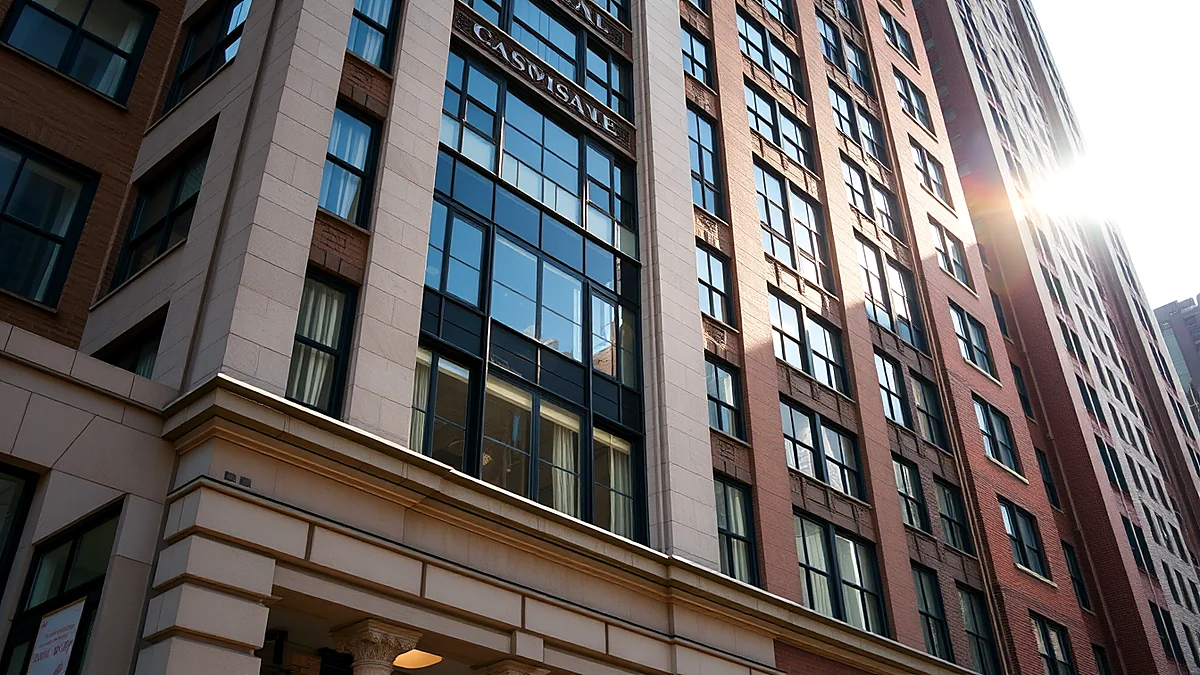
NEW YORK — Sit down at a kitchen table anywhere from Manhattan and Westchester to Bergen County, Fairfield County, or Back Bay Boston, and one financial question quickly dominates the conversation around manhattan office-to-residential conversions & the 467-m tax abatement: How do the 2026 statutory rules, interest rates, and regional tax brackets actually translate into real dollars for your household or business? New York State’s Real Property Tax Law § 467-m provides up to a 35-year property tax exemption—starting at a 90% tax abatement in Manhattan south of 96th Street for projects obtaining permits by June 30, 2026 (85% by 2028; 80% by 2031).
NYC & Tri-State Rent vs. Buy Breakeven Calculator
Weighs Manhattan/Brooklyn rent inflation and down-payment investment returns against NYC buyer closing costs, common charges, property taxes, and home equity buildup.
How RPTL § 467-m Reshapes Midtown and FiDi Conversion Economics?
Between 1995 and 2006, the original 421-g tax incentive transformed Lower Manhattan’s Financial District from a 9-to-5 office canyon into a 24-hour residential neighborhood, adding over 13,000 apartments along Wall Street, Broad Street, and Water Street. Following the post-2020 rise of hybrid work, Manhattan was left with over 85 million square feet of structurally obsolete Class B and C office inventory.
Enacted by Albany under Real Property Tax Law § 467-m, the new office-to-residential conversion incentive directly attacks the single biggest expense line in a New York multifamily pro-forma: NYC Class 2 property taxes, which normally consume 25% to 30% of gross rental revenue.
| Pro-Forma Metric | Without 467-m Abatement (100% Market Rate) | With 467-m Abatement (75% Market / 25% Affordable) |
|---|---|---|
| Office Acquisition Basis ($/GSF) | $230 / SF | $230 / SF |
| Hard + Soft Conversion Construction Cost | $385 / SF | $405 / SF (Prevailing Wage Compliance) |
| All-In Total Development Cost | $615 / SF | $635 / SF |
| Blended Gross Residential Rent ($/NSF/Yr) | $98 / SF | $84 / SF (Blended w/ 25% @ 80% AMI) |
| Annual NYC Class 2 Property Tax ($/SF) | -$19.40 / SF | -$1.94 / SF (90% 467-m Exemption) |
| Stabilized Net Operating Income (NOI / SF) | $42.10 / SF | $51.80 / SF |
| Unlevered Yield on Cost (Development Cap Rate) | 5.48% (Unviable vs. Debt) | 6.92% (Financeable) |
Let’s Run the Numbers in Dollars: Comparing Office Acquisition Basis ($/GSF) vs. All-In Total Development Cost in the Tri-State Corridor
Let’s run the numbers in dollars using verified 2026 benchmarks from our quantitative table above so you can see the exact gap before making a decision:
- Baseline Profile (Pro-Forma Metric: Office Acquisition Basis ($/GSF)): Produces a verified outcome of $230 / SF (With 467-m Abatement (75% Market / 25% Affordable)), reflecting $230 / SF and $230 / SF.
- Scaled Tri-State Profile (Pro-Forma Metric: All-In Total Development Cost): Shifts the net figure to $635 / SF (With 467-m Abatement (75% Market / 25% Affordable)). In exchange for the 467-m tax abatement, developers must permanently designate 25% of residential units as income-restricted affordable housing at a weighted average of 80% of Area Median Income (AMI), including at least 5% at 40% AMI.
To model how this interacts with the rest of your East Coast balance sheet, run your numbers in our NYC & NY State Paycheck Tax Calculator, compare housing and closing tax rules in our NYC Mansion Tax & Closing Cost Calculator, and benchmark after-tax fixed-income yields in our US Treasury Bills vs. Bank CDs Calculator.
Frequently Asked Questions
Which Manhattan buildings qualify for the 90% 467-m tax exemption?
Non-hotel commercial/office buildings located in Manhattan south of 96th Street ( the Prime Development Area) that received their initial Certificate of Occupancy prior to 1991 and obtain a building permit for eligible conversion on or before June 30, 2026 qualify for the top 90% abatement tier for 30 years followed by a 5-year phase-out.
Why are deep post-war glass office floorplates harder to convert into apartments?
Under the New York Multiple Dwelling Law, every habitable bedroom and living room must have natural light and operable window ventilation within 30 feet of an exterior wall. Deep 40,000+ SF floorplates require either carving an interior light well through the center of the building or utilizing interior core space for amenities, storage, and home offices.