




Why Federal Reserve Rate Cuts Don’t Move East Coast Jumbo Mortgages Equally: The 10-Year Treasury Spread
Macro markets brief explaining why FOMC cuts to the overnight Federal Funds Rate reduce 4-week T-Bill and SBA 7(a) Prime rates immediately, while 30-year fixed NY/NJ mortgages track the 10-year Treasury term premium and MBS spreads.
 By Pablo Cirre Gómez and East Corp Capital Quantitative Desk
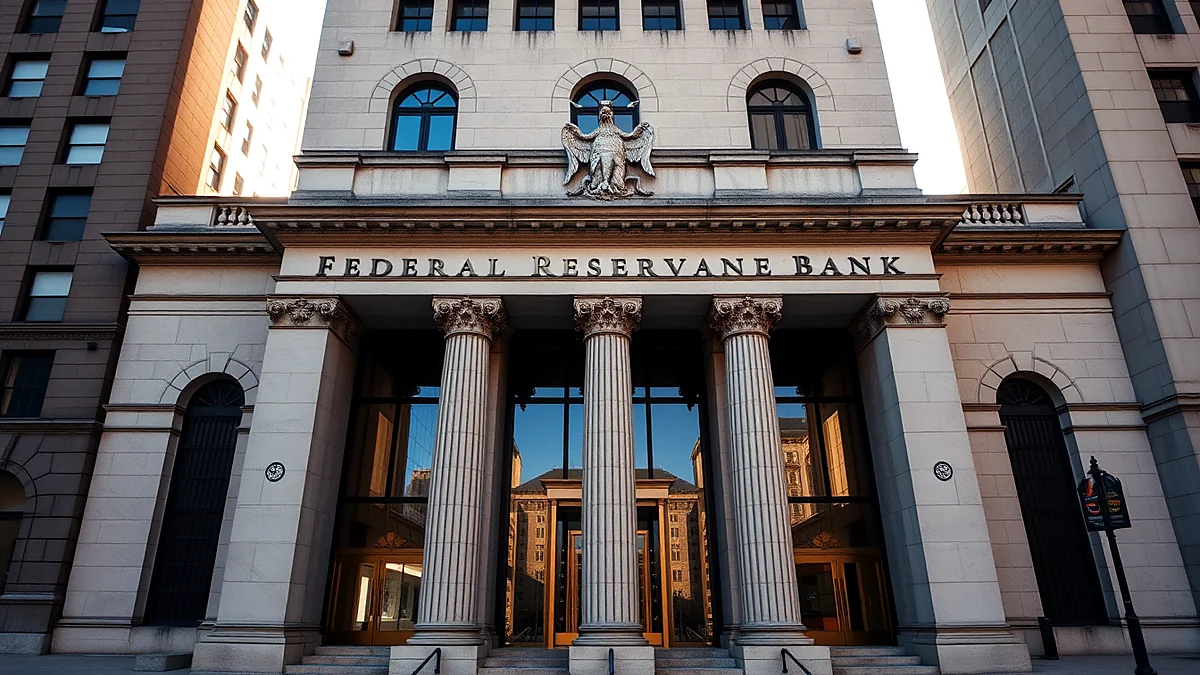
NEW YORK — Sit down at a kitchen table anywhere from Manhattan and Westchester to Bergen County, Fairfield County, or Back Bay Boston, and one financial question quickly dominates the conversation around why federal reserve rate cuts don’t move east coast jumbo mortgages equally: How do the 2026 statutory rules, interest rates, and regional tax brackets actually translate into real dollars for your household or business? The Federal Open Market Committee (FOMC) directly controls only the overnight Federal Funds Rate, which moves the WSJ Prime Rate (Federal Funds Upper Bound + 3.00%), HELOCs, SBA 7(a) variable loans, and 1-to-3 month Treasury Bills.
US Treasury Bills vs. Bank CDs After-Tax Yield Calculator
Compares state-and-local-tax-exempt US Treasury bills against fully taxed bank CDs in NYC, NY, NJ, MA, and PA, and computes the exact Tax-Equivalent CD APY.
Why Relationship Jumbo Mortgages Beat Agency Conforming Rates in NYC and Boston?
A unique quirk of the Northeast housing market is the Jumbo vs. Conforming rate inversion. Because money-center banks in New York and Boston view $1.2M+ mortgage borrowers as prime wealth-management prospects, portfolio Jumbo loans held on bank balance sheets avoid Fannie Mae/Freddie Mac loan-level price adjustments (LLPAs) and frequently price 15 to 40 basis points below conforming rates—especially when combined with asset-transfer relationship discounts.
| Financial Instrument | Pricing Benchmark | Speed of Rate Adjustment | Impact of a -25 bps FOMC Cut |
|---|---|---|---|
| SBA 7(a) Variable Loan & Corporate Revolver | WSJ Prime Rate (Fed Funds + 3.00%) | Immediate (1st day of next month/quarter) | Drops exactly -0.25% |
| Home Equity Line of Credit (HELOC) | WSJ Prime Rate + Margin | Immediate (1–2 billing cycles) | Drops exactly -0.25% |
| High-Yield Savings & Money Market Funds | SOFR / Overnight RRP | Fast (1 to 3 weeks) | Drops -0.20% to -0.25% |
| 30-Year Fixed Conforming & Jumbo Mortgage | 10-Yr US Treasury + MBS Prepayment Spread | Market-Driven (Priced in ahead of FOMC) | Moves with 10-Yr bond auction & inflation expectations |
Let’s Run the Numbers in Dollars: Comparing SBA 7(a) Variable Loan & Corporate Revolver vs. High-Yield Savings & Money Market Funds in the Tri-State Corridor
Let’s run the numbers in dollars using verified 2026 benchmarks from our quantitative table above so you can see the exact gap before making a decision:
- Baseline Profile (Financial Instrument: SBA 7(a) Variable Loan & Corporate Revolver): Produces a verified outcome of Drops exactly -0.25% (Impact of a -25 bps FOMC Cut), reflecting WSJ Prime Rate (Fed Funds + 3.00%) and Immediate (1st day of next month/quarter).
- Scaled Tri-State Profile (Financial Instrument: High-Yield Savings & Money Market Funds): Shifts the net figure to Drops -0.20% to -0.25% (Impact of a -25 bps FOMC Cut). 30-year fixed conforming and Jumbo mortgages in New York, New Jersey, and New England are priced off the 10-Year US Treasury Note yield plus a primary-secondary Mortgage-Backed Securities (MBS) spread of 180 to 240 basis points.
To model how this interacts with the rest of your East Coast balance sheet, run your numbers in our NYC & NY State Paycheck Tax Calculator, compare housing and closing tax rules in our NYC Mansion Tax & Closing Cost Calculator, and benchmark after-tax fixed-income yields in our US Treasury Bills vs. Bank CDs Calculator.
Frequently Asked Questions
How does the WSJ Prime Rate formula work?
By institutional convention across the US banking system, the Wall Street Journal Prime Rate is set at exactly 300 basis points (3.00 percentage points) above the upper bound of the FOMC Federal Funds Target Range.
Should I wait for Fed rate cuts before refinancing a Tri-State mortgage?
Bond markets price in anticipated FOMC cuts months in advance inside the 10-year Treasury yield. Rather than waiting for FOMC press conferences, monitor the 10-year Treasury yield and evaluate refinancing whenever you can reduce your note rate by at least 75 basis points with a CEMA structure (in NY) that recoups closing fees within 18 to 24 months.