
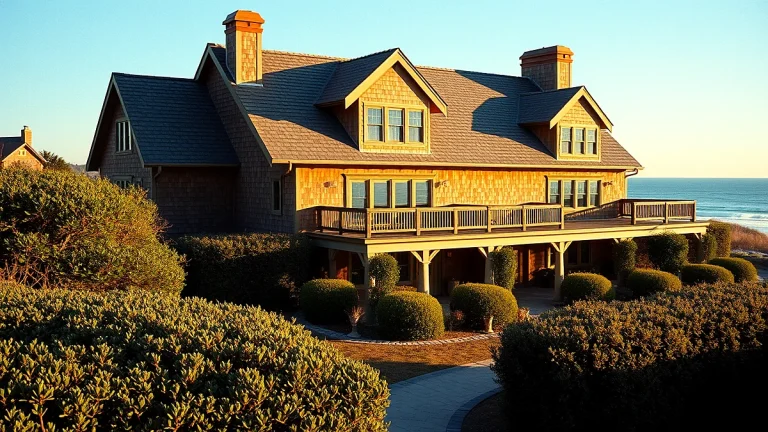



Greater Boston Property Tax & Proposition 2½ Guide (2026): Wellesley, Weston, Newton, Brookline, Lexington & Cambridge
Compare 2026 Greater Boston property tax rates, Proposition 2½ levy limits, and Residential Exemptions in Cambridge (0.42%), Boston, Brookline, Newton, Wellesley & Lexington.
 By Pablo Cirre Gómez and East Corp Capital Quantitative Desk

If you relocate from the New York Tri-State area to Greater Boston, the single biggest surprise on your housing ledger is how low Massachusetts property taxes are. Governed by Massachusetts General Laws Chapter 59 § 21C (Proposition 2½), no Massachusetts city or town can raise its total property tax levy by more than 2.5% per year plus new construction growth unless voters pass a formal ballot override. Even better, cities with massive biotech and commercial tax bases—led by Cambridge, Boston, Somerville, and Brookline—grant owner-occupants a statutory Residential Exemption that cuts annual property tax bills by $3,400 to $4,000 per year.
East Coast Mortgage PITI & Property Tax Calculator
Computes monthly Principal, Interest, Property Taxes, and Home Insurance using real effective property tax rates for NYC, Long Island, Westchester, Northern NJ, CT, PA, and MA.
How Cambridge Achieves a 0.42% Effective Property Tax Rate (Biotech Split Rate + Residential Exemption)
Massachusetts allows municipalities to adopt two powerful tax-Verify shifts under Chapter 59: first, a Split Tax Classification that taxes commercial/industrial/biotech laboratory buildings at up to 175% of the residential rate; second, a 35% Owner-Occupied Residential Exemption. Because Kendall Square in Cambridge houses the densest cluster of pharmaceutical, biotech, and tech real estate in the world, commercial properties fund nearly two-thirds of Cambridge’s municipal budget. After subtracting Cambridge’s ~$3,564 owner-occupied Residential Exemption, a $1,500,000 primary residence in Cambridge pays just ~$6,300 per year in property tax—less than one-fifth of what an identical $1.5M home pays in Scarsdale NY ($33,600) or Tenafly NJ ($35,700).
2026 Town-by-Town & Jurisdiction Benchmark Table
| Municipality / Jurisdiction | 2026 Rate / Ratio | Effective Tax / Cost | Key Statutory & Commuter Note |
|---|---|---|---|
| Cambridge | $6.35 / $1,000 | ~0.42% Net Effective | Yes (~$3,564/yr Saved) · Kendall Square biotech/MIT commercial tax base covers 65%+ of budget |
| Boston (City) | $10.90 / $1,000 | ~0.72% Net Effective | Yes (~$3,984/yr Saved) · 35% owner-occupied Residential Exemption reduces assessed base |
| Brookline | $9.97 / $1,000 | ~0.82% Net Effective | Yes (~$3,420/yr Saved) · Green Line C/D trolley access; top K-12 public school system |
| Newton | $9.76 / $1,000 | ~0.98% Effective | No · 13 distinct villages; Proposition 2½ override history |
| Wellesley | $11.42 / $1,000 | ~1.14% Effective | No · Framingham/Worcester Commuter Rail + municipal light plant |
| Lexington / Weston | $12.25–$12.68 / $1,000 | ~1.22%–1.27% Effective | No · Nationally ranked STEM high schools; predominantly residential base |
Proposition 2½ Overrides in Wellesley, Newton, Lexington & Weston + The 4% Millionaire Surtax
In affluent western suburbs such as Wellesley, Weston, Newton, and Lexington, commercial property makes up a much smaller share of the tax roll, and voters periodically approve Proposition 2½ operating overrides or debt exclusions to fund new high school campuses. Even so, effective property tax rates in Wellesley (~1.14%), Newton (~0.98%), and Lexington (~1.25%) remain roughly $12,000 to $18,000 per year lower than comparable NY/NJ suburbs. High earners must, however, account for Massachusetts Question 1 (Article 44), which imposes a 9.0% state income tax rate (5% base + 4% surtax) on taxable income and capital gains exceeding $1,083,150 (2026 inflation-adjusted threshold).
Frequently Asked Questions & Statutory Rules (2026)
How do I qualify for the Boston, Cambridge, or Brookline Residential Exemption?
To claim the ~35% Residential Exemption, you must own and occupy the property as your principal domicile on January 1 of the preceding year ( as verified by your Massachusetts Form 1 income tax return) and file the municipal Residential Exemption application by April 1.
What is the difference between a Proposition 2½ Override and a Debt Exclusion in Massachusetts?
A Proposition 2½ Override permanently increases a town’s annual property tax levy limit to fund ongoing operating expenses (such as teacher salaries), whereas a Debt Exclusion temporarily raises taxes only for the 20-to-30-year life of a specific municipal bond (such as building a new high school) and expires once the bond is paid off.
Can married couples in Massachusetts file separately to get two $1,083,150 Millionaire Surtax thresholds?
No. Under the 2023 Massachusetts tax reform package, married couples who file a joint federal tax return are legally required to file a joint Massachusetts state return—preventing married couples from splitting income across two separate $1M surtax thresholds.
Does Wellesley have lower electricity costs than surrounding Greater Boston towns?
Yes. Like Concord and Belmont, the Town of Wellesley operates its own non-profit Municipal Light Plant (WMLP), charging residential electricity rates roughly 30% to 40% lower than investor-owned utilities (Eversource and National Grid).